
$#@&%!!!

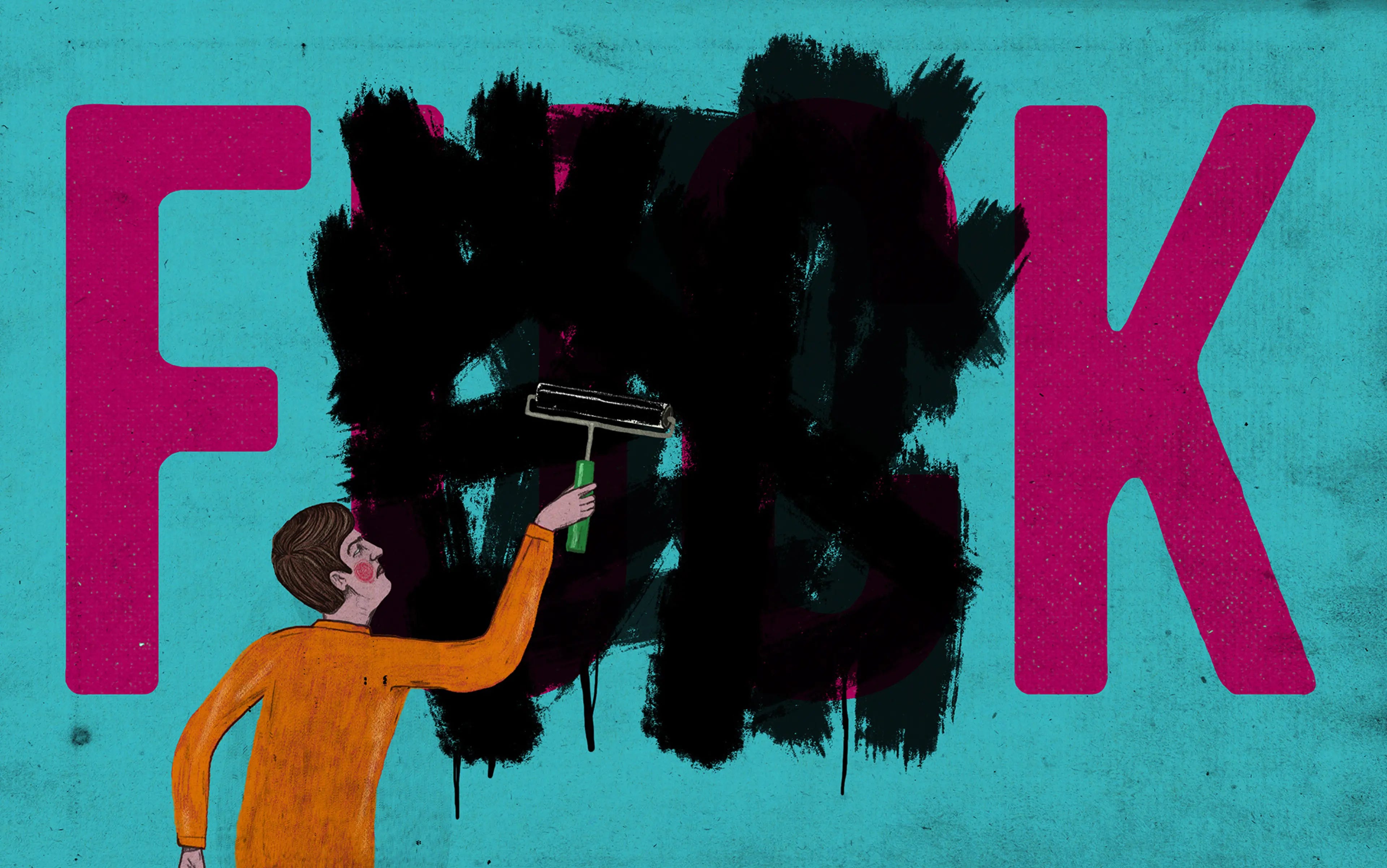
WHILST I grew up in a working-class household, it soon became clear that 'bad' language was reserved for the otherworldly arena of parental conflict and that if my little sister and I dared to imitate such verbal abominations we were punished accordingly. I later discovered that some of my middle-class friends (or fiends) would make the claim that swearing is an indication that one has a limited vocabulary. I found this very hard to swallow, particularly as vernacular of this kind performs an important social role to the extent that a well-chosen expression can have the effect of reinforcing a point, lightening the mood or simply expressing one's anger and pain.
As my own vocabulary expanded beyond the carefully moderated vocabularies of those whose impeccable utterances were kept free of such vulgar interjections, even to the point of policing themselves with the six-sided tyranny of a resident swear-box, I noticed that such claims amounted to nothing more than an urban myth and that it was possible to retain the profanities of one's errant youth and tell these bourgeois pillars of self-righteousness to 'go away' in no uncertain terms. Whoops, there I go again.
Yes. I once heard an octogenarian working class couple declaring love to each other by ironically telling each other to 'fuck off' with beaming smiles onntheir faces.
Basil Bernstein upset a lot of lefties when he described the type of speech used by the working class pupils as a 'limited code' and that they were unfamiliar with the 'elaborate code used by the middle class students and teachers. What he was reeferring to was the way educated middle class people used a wide vocabulary and grammar to distinguish themselves and their opinions from others through the content of their words rather than the context in which they were uttered (context free), whereas working class people tended to rely on social context (context bound) for meaning often using the same words to mean very different things, which emphasised group solidarity. He later admitted to my mentor, N Domgoole, that when talking about serious and deeply personal subjects, like death, workjing class people did tend also to use an elaborate code. What occurs to me is that of course middle class people also use a different type of limnited or what I would call an 'oral' code when talking informally. The need to put all the meaning oif an utterance into word semantics and syntax is surely related to a culture that uses writing fot important topics - writing is relatively context free, so has to be more elaboate in its verbal expressions to ensure meanings cross time and space boundaries in an abstract set of two dimnesional marks.
Hugh Brody is very good on the verbal sophistication of oral cultures - in his instance people of the Arctic and Sub-Arctic. But so called working class people have - if they have had the opportunity to settle over generations - also have a very sopihiusticated oral culture which is generally more important to them than the abstract culture of books and other lomng lasting records of communicative acts.