
Are You Mad?

YEARS ago, as teenagers, a friend and I began to mull over the fact that we had never been part of mainstream society and considered the possibility that we were somehow 'normal' whilst most people we knew were completely 'abnormal'. We eventually settled on the idea that one had to be a little 'mad' to break out of what we now describe as the Matrix, even though we were generally sound of mind.
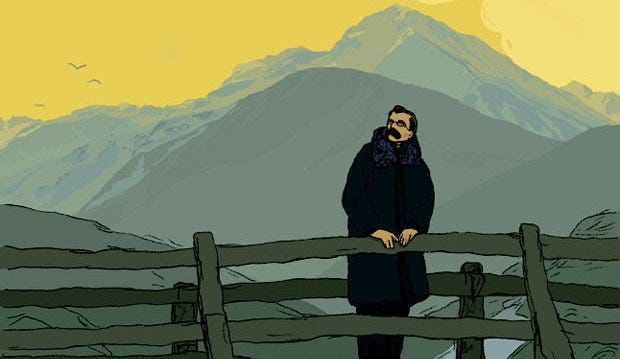
Back in 1881, around the time that Friedrich Nietzsche was writing The Dawn of Day, the philosopher realised that an early psychological illness had drawn him away from the bourgeois world of nineteenth-century Germany:
"Sickness detached me slowly [from society]; it spared me any break, any violent and offensive step . . . My sickness also gave me the right to abandon all habits completely, it commanded me to forget."
Nietzsche, therefore, had demonstrated that one does indeed have to be at least slightly 'mad' in order to pull away from the corrosive uniformity of the mass, but those who would follow in his renegade footsteps - for good or ill - are clearly very different to the less complex, shallow individual he describes as the Last Man.
Conversely, although a significant number of contemporary society's rejects end up joining fringe organisations they ultimately fail to alleviate their suffering by engaging with the real world of mountains and forests, as Nietzsche did. In fact most choose to present themselves as victims and hide behind masks, vaccinations and government platitudes. Ironically, the very traits which may have allowed someone to stand out from the crowd in the past have led to an increasing dependence upon the state. This affiliation with the very entity that was described by Nietzsche as "the coldest of all cold monsters" has transformed the traditional outsider into the biggest conformist of all.