
Bataille's Nietzscheanism

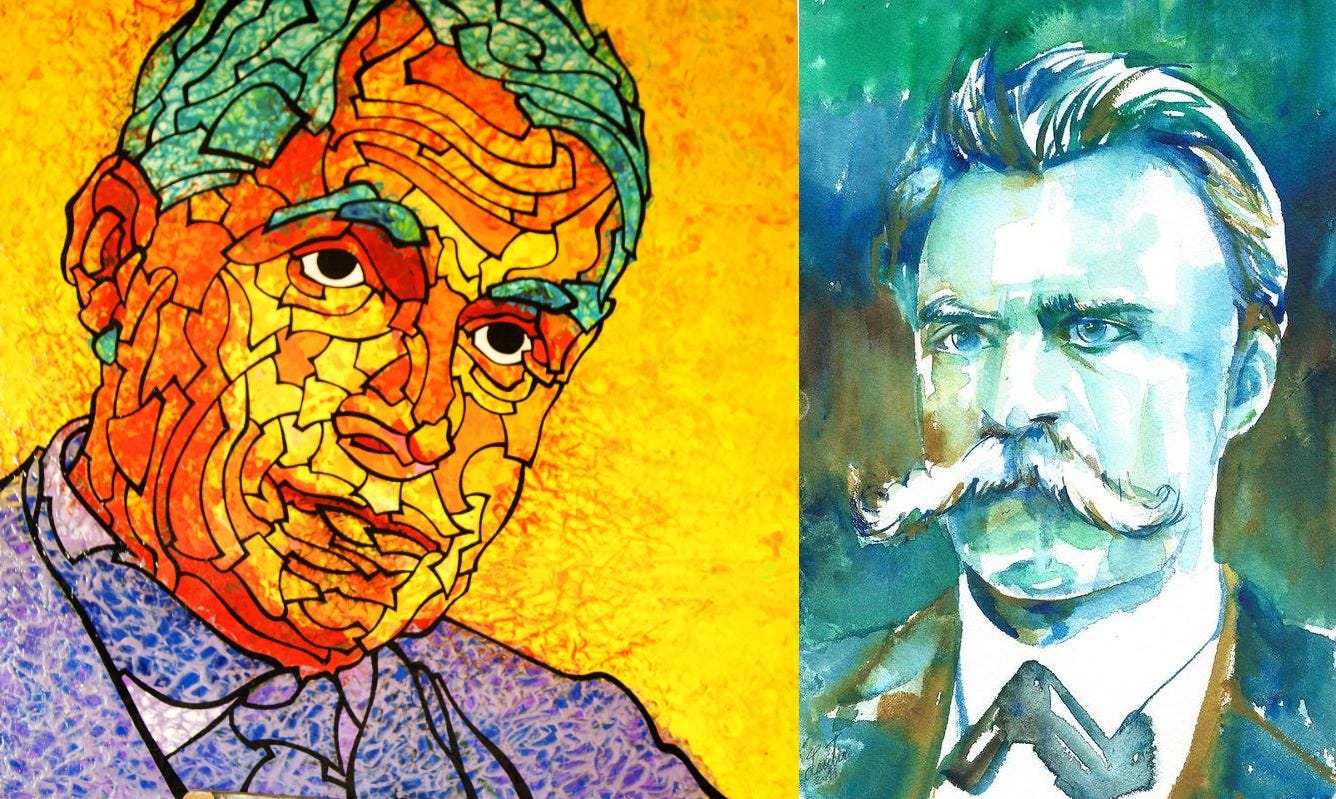
FRIEDRICH Nietzsche (1844-1900), by way of Thus Spoke Zarathustra, warns his readers that "Intimacy with great thinking is unbearable. I seek and call out to those to whom I can communicate such thinking without bringing about their deaths." I would argue that it is not just familiarity with thorny philosophical concepts which, for many people, conjures up visions of intellectual morbidity, but 'intimacy' in the far deeper sense that thinkers themselves often tread a very lonely path.
At the very outset of his own study of Nietzsche's ideas, the controversial French philosopher Georges Bataille (1897-1962) admits that "Motivating this writing - as I see it - is fear of going crazy." Bataille may sound like a common-or-garden drama queen, but he was also determined to play-out Nietzsche's thought during the course of his own lifetime and for that he deserves our respect. In fact Bataille was prepared to risk everything, not least by attacking National-Socialism's selective misappropriation of Nietzsche's work whilst labouring under Hitler's occupation of France in the 1940s. As he explained: "Chance represents a way of going beyond when life reaches the outer limits of the possible and gives up. Refusing to pull back, never looking behind, our uninhibited boldness discovers that solutions develop where cautious logic is baffled."
Bataille, therefore, in a quest to merge Nietzschean philosophy with life itself, sought to go one step further than his hero by accepting that Nietzsche had failed to direct his will-to-power towards any specific goal and part of the reason for this is that Zarathustra is merely a fiction: a device by which Nietzsche sought to encourage his readers to overcome their most basic human traits. One of the biggest philosophical conundrums that Bataille faced was the attainment of freedom without compromise. This, as he explained, is often a result of being motivated for the most erroneous reasons: "Human entirety can only be what it is when giving up the addiction to others' ends; it enslaves itself in going beyond, in limiting itself to the feudal or bourgeois spheres this side of freedom."
In other words, an outcome of this kind if nothing more than a form of liberation dressed in chains. Real freedom, he believed, lies in the rejection of morality and, ironically, embracing 'evil' as a way of fulfilling Nietzsche's desire for "emancipation from all constraint". It is a fact that Nietzsche often feared the outcome of his famous will-to-power, particularly when he saw it manifested in a most cruel or barbaric fashion, but for Bataille 'evil' remained "the opposite of a constraint that on principle is practiced with a view toward good." If this sounds like an endorsement of morality itself, he adds: "Of course evil isn't what a hypothetical series of misunderstandings makes it out to be: isn't it essentially a concrete freedom, the uneasy breaking of a taboo?" Perhaps if we stare hard enough into the Abyss, the Abyss might just be forced to look away in the manner that a timid man will avoid the gaze of another by taking a sudden interest in his shoes. Dare to be. Become who you are.