
Beans Means Scenes

THE Surrealists were often known for being pretentious, to say the least, and André Breton ran his circle like a dictator. Very often, this would lead to a mass exodus of poets and artists who had become tired of his antics and who were no longer prepared to tolerate his temperamental and unpredictable behaviour.
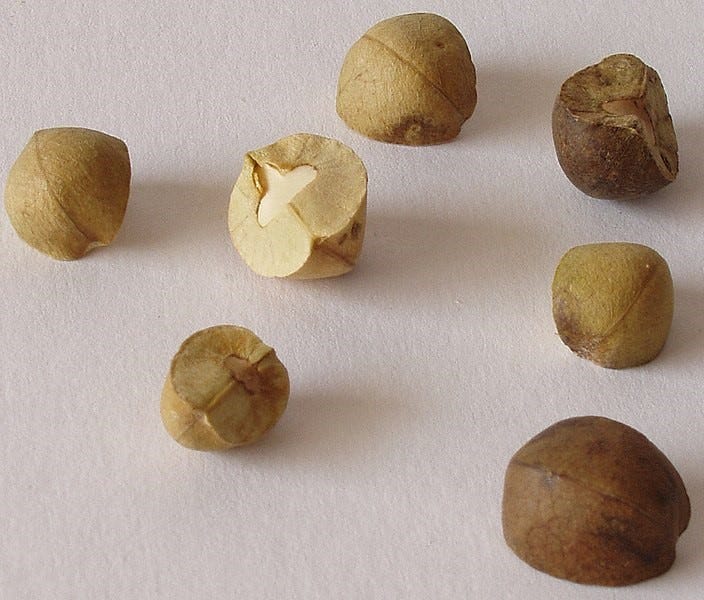
Towards the end of 1935, as the Parisian section of the Surrealist movement gathered for its daily meeting at the Café de la Place Blanche, Breton found himself intrigued when a handful of Mexican jumping beans were spread across the table for his amusement. Roger Caillois, a close friend of Georges Bataille who had only recently decided to throw in his lot with the group, was astonished at Breton’s childlike fascination with the erratic motions of these curious items and his seeming determination to enjoy the display prior to having a discussion about the probable cause behind the movement of the beans themselves. In reality, of course, these objects are seed pods that have been inhabited by the larvae of a small moth.
Caillois, frustrated at the bourgeois nature of Breton’s apparent satisfaction with pure enjoyment, suggested that they cut the beans open to see what was inside. Exploding with rage, Breton explained that before subjecting the “inaccessible and adorable” beans to a process of cold investigation he wanted to savour the moment Caillois, disturbed by his counterpart’s intense outburst, left both the café and Surrealism for good. The following day, he sent Breton a long letter in which he set out his philosophical disagreements in some detail. Whilst it is hard to imagine that the separation of two of France’s leading avant-garde figures could have been triggered by something as trivial as a handful of beans, perhaps this was Breton’s most ‘surreal’ moment of all?