
Byronic Perceptions

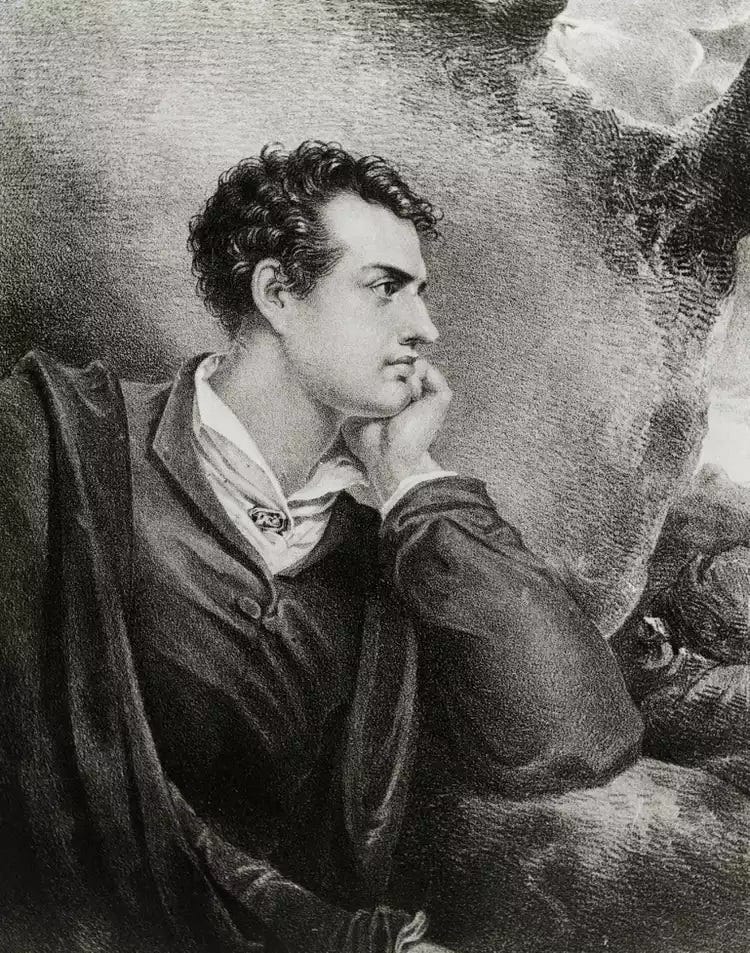
THE famous English poet, Lord Byron (1788–1824), had far less of an understanding about the true nature of things than some of the other English Romantics and this is evidenced by his portrayal of the hero in Canto III of Childe Harold III (1816) and the manner in which he reflects on the death of his cousin on the bloody plains of Waterloo:
But when I stood beneath the fresh green tree,
Which, living waves where thou didst cease to live,
And saw around me the wild field revive
With fruits and fertile promise, and the Spring
Come forth her work of gladness to contrive,
With all her reckless birds upon the wing,
I turn’d from all she brought to those she could not bring.
By mourning the loss of his cousin and lamenting the possibility that his spirit could nonetheless appear among the fruits of nature, this quintessentially Byronic character is merely reinforcing the subject-object dichotomy. I much prefer what William Wordsworth had to say in his Immortality Ode (1804) about the importance of transcending our basic sense perception and being able to “see into the life of things” with a spiritual or inward eye. Samuel Taylor Coleridge also spoke of “the one life in us and abroad,” which relates to a universal energy that lies beyond all sensory experience.
It has been said that Byron’s failure to appreciate the connection between man and nature lay in his ‘humanitarianism,’ although I would suggest that a more appropriate term would be ‘anthropocentrism’.
Yes. Note that W and C are the older generation? Though Keats' sense of iddntification with the natural world is keen, feels sometimes a little forced, and also like Byron, a litttle alienated from real nature.
Not sure what to make of Samuel Palmer's ecsatic visions of farm labourers in Shoreham - except that they are similar to some of my dream visions of the Holy Land I used to have and they give me comfort despite what I have read of the terrible plight of farm labiourers in 19th c.