
Human-Alien Relations

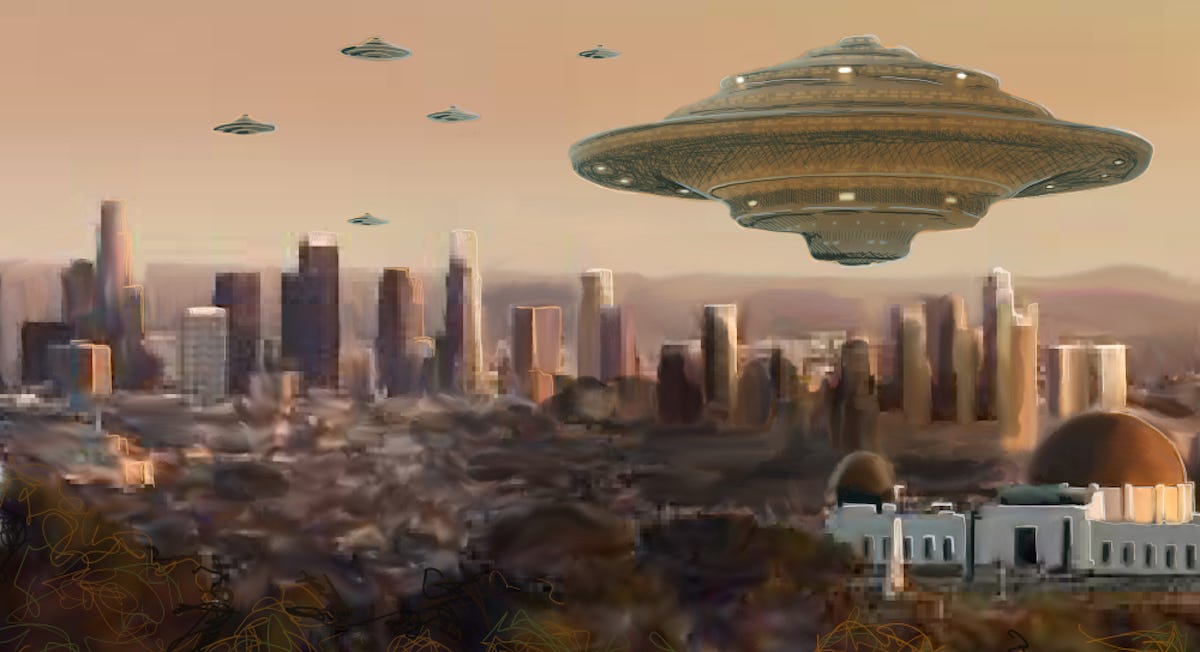
AT a time when the World Health Organisation has established itself as a universal government-in-waiting, using health as a pretext for global tyranny, the Guardian is asking the question: “If aliens contact humanity, who decides what we do next?”
Apparently, we were all running around like headless chickens when Covid was foisted upon us, so according to Lewis Dartnell, an astrobiologist and professor of science communication at the University of Westminster, the main priority
“is to establish some form of international agreement to prevent capable individuals or private corporations from responding independently.”
If the Martians had decided penetrate the earth's atmosphere when Henry Kissinger was still alive and kicking, you can bet your bottom ufodollar that he would have been waddling towards the Mother Ship like a rat who has just discovered where his unsuspecting hosts keep the cheddar. In fact American diplomacy's answer to a Komodo dragon would probably have been related to most of the new arrivals.
I'm sure old Henry is busy playing water polo on a team of hornèd gentlemen in the lake of fire!.. The problem is that Prof. Dartnell is trying to leap one step ahead of the rest of us. Right now society is still getting to grips with the revelation that ET intelligent life even exists. As with other examples in the past, like Darwin's evolution or Columbus discovering the New World, it takes time to integrate that new knowledge, especially if it involves unlearning the previous convention that such things do not exist. There's also a "soft and hard" version of this new disclosure that depends on whether we pick up their radio signals from a million light-years away or instead realize that they have managed to get much closer, being on the earth with us already. The implications of those two versions are totally different. Forming a policy we can all agree on can only come afterwards, in my view.