
Learning from Parmenides

IT is always interesting to relate ancient philosophical thought to contemporary affairs and those familiar with the later Pre-Socratics will be aware of the intellectual warfare that took place between the thinkers who believed that the world is fixed and those who insisted that it is always changing. Heraclitus (535-475 BCE), who later influenced the thought of modern figures such as William Blake (1757-1827) and T.S. Eliot (1888-1965), made the observation that you cannot step into the same river twice. By the time you come to dip your toes into the water for a second time, therefore, its consistency has already changed and this fact apparently demonstrates that everything is in a state of flux and thus perpetual change - combined with the interaction of seemingly opposed forces - is akin to a great universal dance that is both unceasing and yet, in light of an ironic constancy, entirely stable.
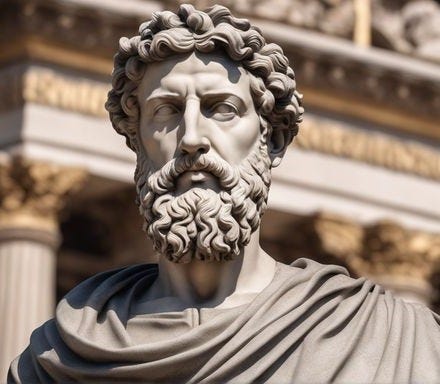
The opponents of Heraclitus, known as the Eleatics, included men such as Parmenides (b. 515 BCE) and his idea that the universe is static and unchanging. Claiming to have been inspired by the Goddess of Truth, Parmenides divides philosophy into two spheres and argues that that whilst true knowledge is based on the speculative reason of nature (physis) it is always threatened by mere opinion which, in itself, is a consequence of the senses. Whilst nature ensures that the world is unchanging, he claims, it is only our senses that tell us different and this happens by way of the constantly fluctuating customs (nomos) which essentially hypnotise us by creating an illusory world of appearances. Parmenides insists that this represents a division between nature and convention, reason and the senses. Things do not really move at all, he says, it is a conjuring trick in which the ever-changing values of the times conspire to delude our senses and thus impair our reason.
Despite the fact that Parmenides was ridiculed for these ideas, the ensuing philosophical debate concerning change and continuity can help us to understand why the day-to-day behaviour of most political commentators is entirely worthless. If we consider the number of people who waste time analysing stories from the mainstream media, most of which are designed to provoke discussion on the terms of the ruling class, we discover that the Parmenidean idea of changing appetites and passions is alive and well. A large number of people are simply unable to contain or regulate their senses by stepping back and looking at the wider picture, meaning that the narrow parameters of discourse force them into taking sides with one of two sanitised viewpoints.
What we also find, is that as the media soap opera changes slightly from day to day, thereby retaining the interest and curiosity of its eager consumers, when we strip away this world of appearances it becomes clear that there is indeed an unchanging dimension that remains unaffected by public opinion: that of the banks and corporations who ensure that none of this managed dissent ever threatens the permanent good health of the capitalist economy.
Maybe Parmenides wasn't such a fool, after all?