
Moore's Paradox

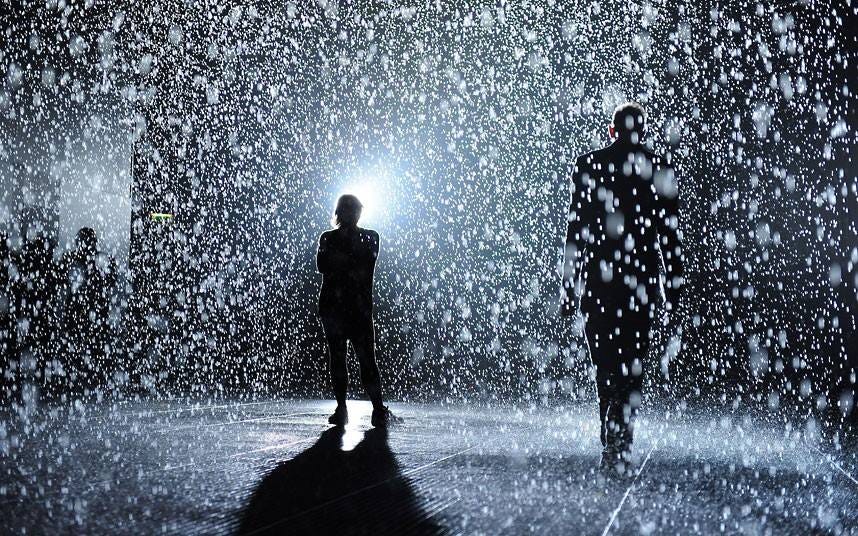
I HAVE reached the conclusion that a large number of my fellow countrymen are suffering from what is commonly known as Moore's Paradox. Like myself, the author of this unusual philosophical conundrum - George Edward "G. E." Moore (1873-1958) - came from Upper Norwood and was educated close to my father's own childhood home in East Dulwich, whilst my mother, grandmother and great-grandmother all lived in nearby Moore Road, which was named after the man himself . In order to illustrate the precise nature of Moore's Paradox, however, allow me to provide you with a very simple example. If someone made the following statement it would, ostensibly, seem fair to assume that they were being thoroughly inconsistent:
"It is raining, but I do not believe that it is raining."
Whilst it seems impossible for someone to accept that it is raining and, simultaneously, to reject the notion that it is actually raining at all, Moore's Paradox insists that there is no logical inconsistency at work here because the former is a statement about the weather and the latter a statement about the person's belief in relation to the weather itself. In other words, Moore claimed that it is quite possible for it to be raining and for the person who is aware of it to completely discount the facts.
Similarly, in the wake of Brexit it seems that one can subconsciously acknowledge that the British State is no more in favour of freedom and liberty than its Brussels counterpart, yet continue to suppress reality by refusing to accept it as fact.
Moore or less.
I voted Leave, but it's very obvious the Starmer regime is walking over that democratic outburst like dead leaves. I sense no paradox.