
Nice Try, Socrates!

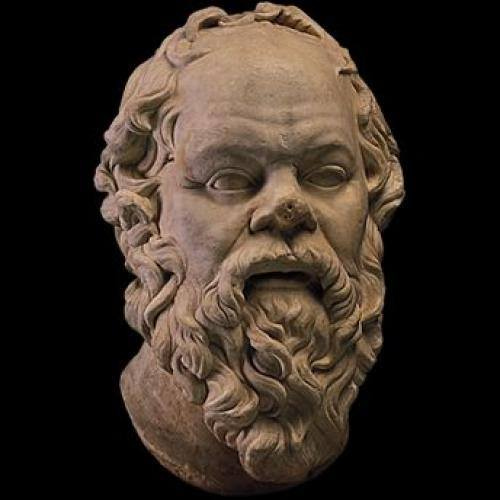
NO doubt Socrates thought he was being really clever when he replied to the charge that he had been "corrupting the young" by saying that it was surely not in his best interests to do so. According to the actual story, if he had corrupted his associates "it must have been unintentional, since if they were corrupted they would be harmful to him, and no one harms himself intentionally."
Despite this characteristic attempt by Socrates to lose himself in the swirling mists of sophistry, what the prosecution (namely Melitus) should have realised is that the entire matter is purely subjective because people have a different interpretation of what may and may not be in the best interests of society in general. Not to mention, of course, what is meant by the term "corruption".
At least if we are to believe Plato, and his version of events are certainly more reliable (and philosophical) than those of Xenophon, but we cannot escape the fact that Socrates, Melitus and those judged to have been corrupted - as well as you and I, come to that - each have a different way of looking at the world. Indeed, even Plato's defence of Socrates is designed to protect the reputation of Socratic philosophy itself and is therefore another form of subjective reasoning.
Imagine a paedophile attempting to proclaim his innocence by contending that the charges brought against him are simply not feasible on account of his prospective victims being a potential threat to himself. Molesting children is certainly harmful to the abuser if he or she happens to get caught, but I doubt any court in the land would accept the Socratic line of defence. I do not, as an amoralist, believe that one side is 'right' and the other 'wrong', necessarily, as I don't need morality to tell me how to interpret certain forms of behaviour or help me decide whether something is in the interests of the community or not, but philosophical acrobatics of this kind will never triumph against universal standards of law.
Our paedophile, then, even if he really believed his own perverse argumentation, would still be forced to accept the hemlock of standardised justice. Socrates knew this, which is why he tried to throw the charge back in the faces of his accusers by turning the whole thing on its head. Not by presenting a counter-argument based on a completely different set of values, but by trying to be seen to conform with prevailing custom. Not through negation, therefore, or constructing an antithesis, but at the expense of being true to oneself.
Imagine smashing a bank window and then, in your defence, claiming that it was done not because you are opposed to usury, but because you think the window might look better without glass. It can often pay to be economic with the truth, especially when you find yourself in something of a predicament, but self-betrayal of this kind is tantamount to cowardice.