
On Suffering

FURTHER to what I said recently about rejecting the pitiful and degrading strategy of victimhood that has long been applied by minority groups and, in more recent times, by the most disaffected and disillusioned elements of the Right, it is useful to remember that the word 'suffer' comes from the Latin sub plus ferre, meaning 'to bear or allow'. Despite this modern trend towards pessimism, ressentiment and despair, we must never lose sight of our own potential and it is worth recalling what the brilliant Jungian psychologist, Marie-Louise von Franz (1915-1998), said about conquering hopelessness:
"Jung has said that to be in a situation where there is no way out, or to be in a conflict where there is no solution, is the classical beginning of the process of individuation. It is meant to be a situation without solution: the unconscious wants the hopeless conflict in order to put ego consciousness up against the wall, so that the man has to realise that whatever he does is wrong, whichever way he decides will be wrong. This is meant to knock out the superiority of the ego, which always acts from the illusion that it has the responsibility of decision. [...] If he is ethical enough to suffer to the core of his personality, then generally, because of the insolubility of the conscious situation, the Self manifests. In religious language you could say that the situation without issue is meant to force the man to rely on an act of God. In psychological language the situation without issue, which the anima arranges with great skill in a man's life, is meant to drive him into a condition in which he is capable of experiencing the Self. When thinking of the anima as the soul guide, we are apt to think of Beatrice leading Dante up to Paradise, but we should not forget that he experienced that only after he had gone through Hell. Normally the anima does not take a man by the hand and lead him right up to Paradise; she puts him first into a hot cauldron where he is nicely roasted for a while.” (Interpretation of Fairy Tales, 1970).
Another Jungian psychologist, Robert A. Johnson, who, instead, writes from a Christian perspective, puts it another way:
"The religious experience lies exactly at the point of insolubility where we feel we can proceed no further. This is an invitation to that which is greater than one's self." (Owning Your Own Shadow, 1991).
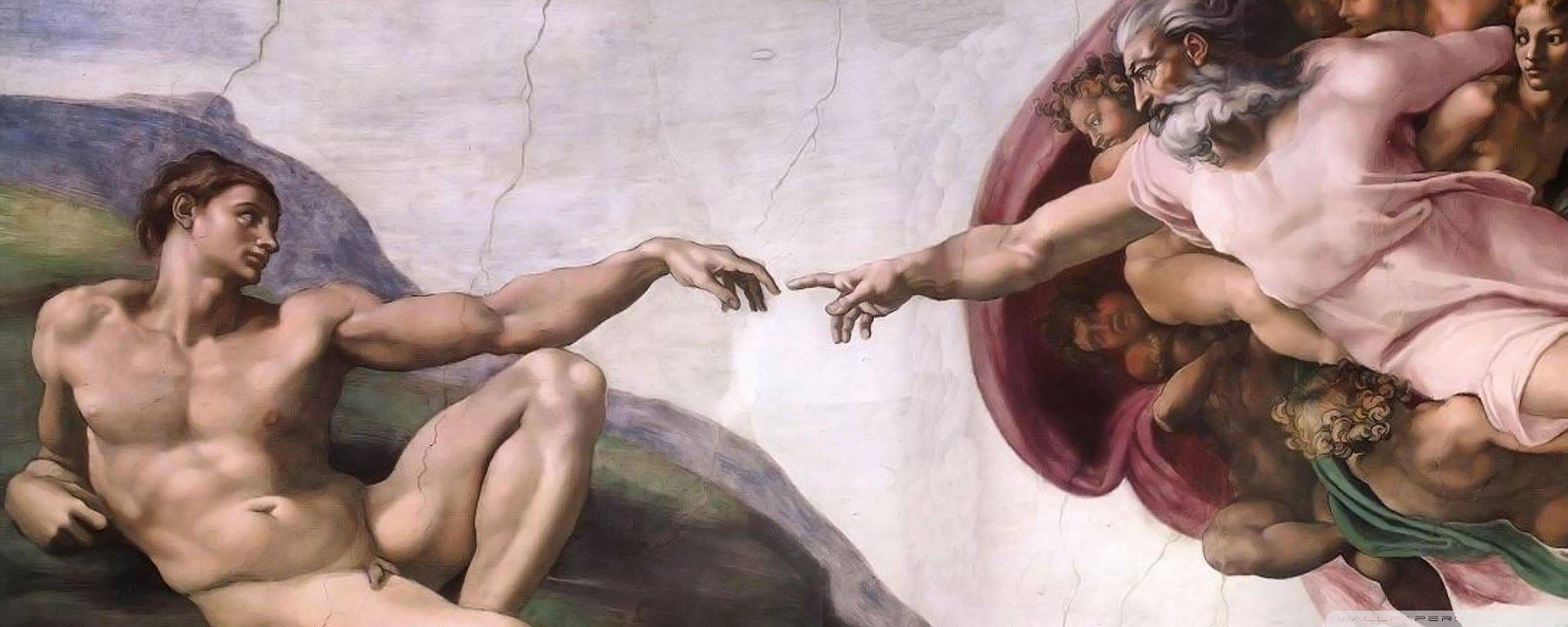
Rather than wait for an external god to sort things out for us, however, I take a more Gnostic position in that I believe that each one of us contains within us a spark of the divine and that it is a question of actualising this latent potential. What this really means, therefore, is that extreme situations often bring out the best in people and that it is only through struggle that we learn to cultivate and develop our finest attributes. Many people suffer because they allow others to make them suffer, regardless of whether they are actually aware of it or not. Politics and religion are not too dissimilar from one another and the Marxists understood the symbolic power of Christ's suffering and resurrection, as well as its adaptation in a more revolutionary context, and this is why we ourselves must appeal to the 'god' that lies within us, throw off the shackles of slavery and fulfil our true destiny as a people.
Do not remain content to be a victim or to allow our self-appointed 'masters' to assert their superiority over us. Life without struggle is meaningless. Conversely, life as struggle is the very meaning of life itself.