
Restoration from Collapse

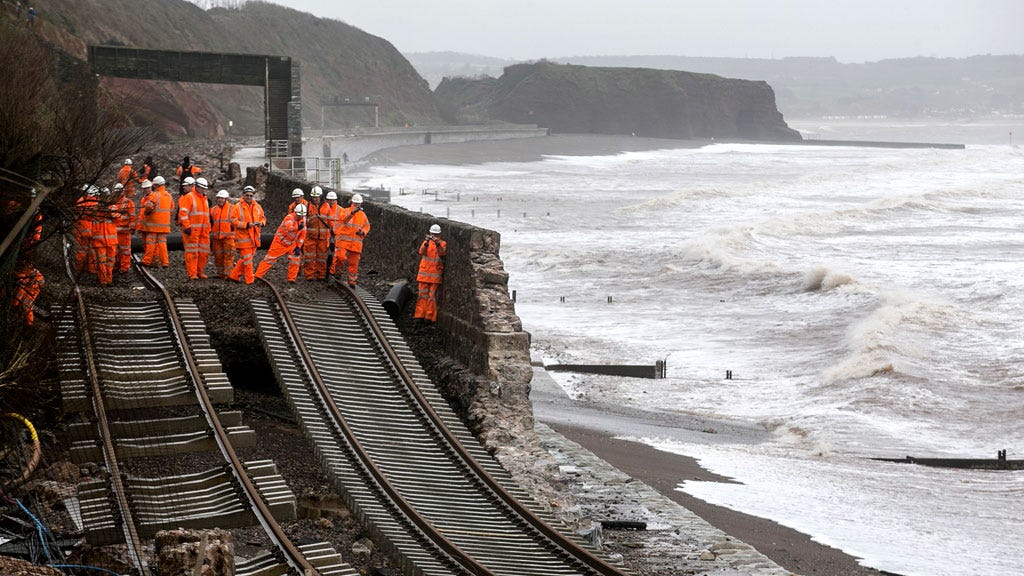
WHEN you actually stop to consider the manner in which civilisation has sought to either constrict or divert the natural world by building dams and canals, felling trees, concreting over rivers, polluting the environment, constructing motorways across green land, using trawlers to depopulate the seas and various other behavioural profanities, it is hardly surprising that nature goes to such lengths in order to reclaim her territory.
As Oswald Spengler once said:
“All things organic are dying in the grip of organisation. An artificial world is permeating and poisoning the natural. The Civilisation itself has become a machine that does, or tries to do, everything in mechanical fashion.” (Der Mensch und die Technik, Munich, 1931).
As Spengler also noted, however,
“the Faustian thought begins to be sick of machines. A weariness is spreading, a sort of pacifism of the battle with Nature. Men are returning to forms of life simpler and nearer to Nature; they are spending their time in sport instead of technical experiments. The great cities are becoming hateful to them, and they would fain get away from the pressure of soulless facts and the clear cold atmosphere of technical organisation.” (Ibid.)
The German, whose work is often considered very pessimistic, may have been surprised to learn that some of us living in the first half of the twentieth century view the disintegration of the Faustian dream as a sign of great optimism.