
Three Wise Voices

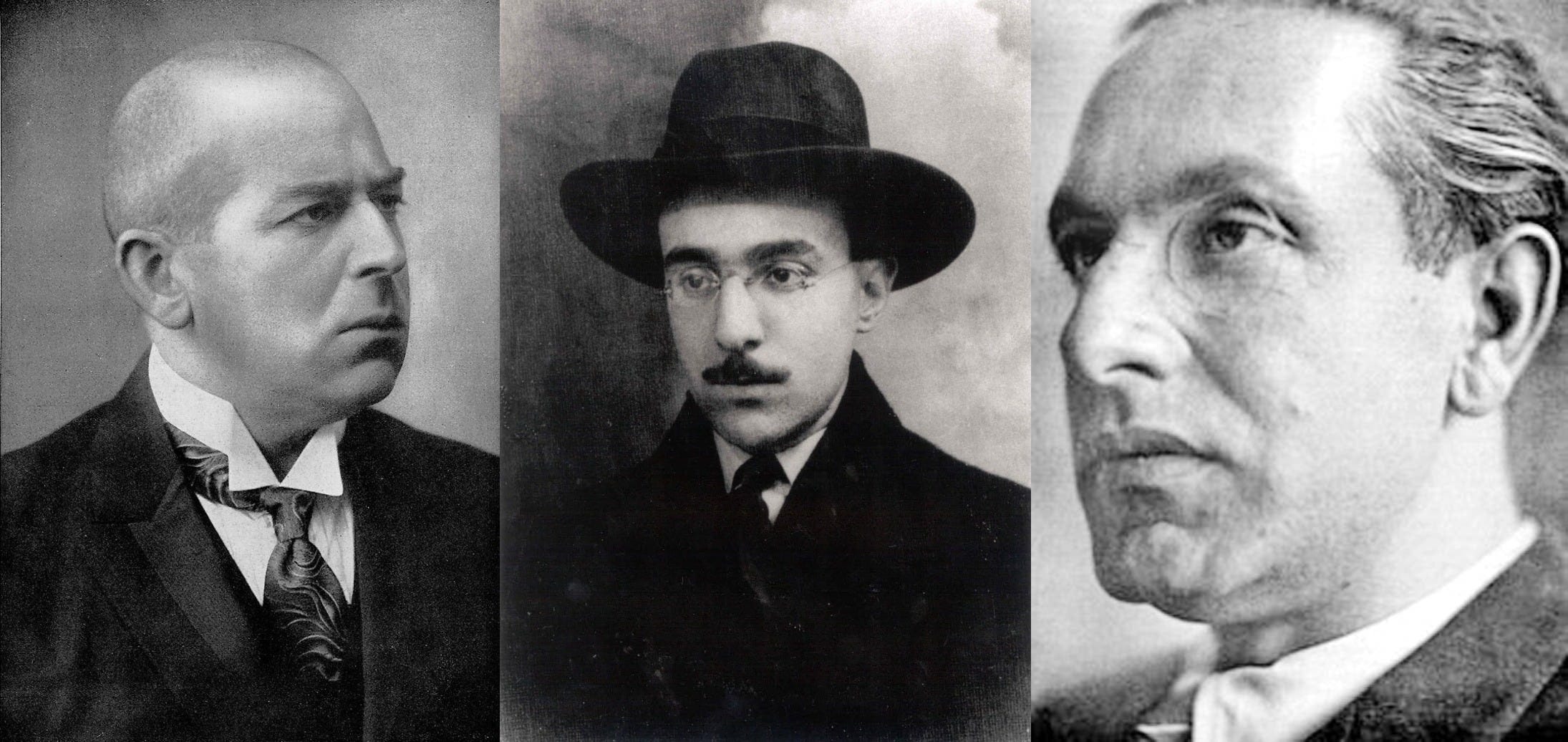
"OPTIMISM is cowardice," announced Oswald Spengler, just two years prior to the Nazi seizure of power. It is hardly surprising, therefore, that expressing such a controversial opinion within the strict boundaries of a political system that was so determined to advance the notion of a 1,000-year Reich rapidly led to the historian being regarded as something of a persona non grata. Not only was Hitler a thoroughly up-to-date man of his time, eager to oversee the construction of Modernist architecture and a sprawling concrete autobahn that brought death and disfigurement to the countryside, but he and his capitalist financiers set about appropriating and perverting the rich vein of heathenism that had been making a comeback since the late-nineteenth century.
If Fernando Pessoa had lived in Germany at that time, he too would have been seen as a threat to the totalitarian state. As he had already noted, prior to Spengler,
"what relationship can an age such as this one have with a spiritual heir to the race of constructors, with a soul inspired by paganism's truths? None, except one of instinctive rejection and automatic scorn."
Again, this attitude was entirely out of step with the times and genuine outsiders such as Spengler and Pessoa made no attempt to mask their mutual loathing for the false optimism being projected by the ruling classes of the early-twentieth century. As the following statement makes clear, Pessoa was certainly not part of the modern stream epitomised by the democrats, fascists and communists who were merely attempting to utilise the forces of technology and industrialisation and carry them forward into a new century:
"We, the only dissenters from decadence, are thus forced to assume an attitude that, by its nature, is likewise decadent. An attitude of indifference is a decadent attitude, and our inability to adapt to the current milieu forces us to just such an attitude. We don't adapt, because healthy people cannot adapt to a sick milieu, and since we don't adapt, it is we who are sick. This is the paradox in which those of us who are pagans live. We have no hope and no cure."
Although I believe that the real cure to this dilemma lies in the natural world and that to adhere to that which is organic is to come down on the side of balance and restoration, Pessoa's remarks about the individuals who refuse to conform with a diseased system - however much it is disguised by the politicians of the day - are still incredibly valid. The polar extremities of the political spectrum, red or brown, are not so radical as they like to make out and are used to accelerate the programme of the centre.
Lest we forget, Julius Evola also made a distinction between the inauthenticity of modernity and the timelessness of an underlying reality that is forever renewed and which runs counter to the progressive values of the current age:
"It is typical of a heroic vocation to face the greatest wave knowing that two destinies lie ahead: that of those who will die with the dissolution of the modern world, and that of those who will find themselves in the main and regal stream of the new current."
What Evola refers to as 'new,' of course, is actually that which has prevailed from the very beginning.